
Being told you need a PET CT scan when you have only ever had a regular CT can feel confusing and sometimes worrying. The two scans sound similar but serve very different purposes. This guide explains the difference clearly so you know exactly what to expect.
If your doctor has recommended a PET CT scan and you have only ever had a regular CT scan before, the difference can seem confusing — and a little alarming. Both involve lying inside a large imaging machine, but what they measure, how long they take, and what they can detect are fundamentally different.
This guide explains exactly what each scan does, why your doctor would choose one over the other, what specific conditions each is best suited for, how much each costs in the US, how to prepare, and what the experience of each scan is actually like.Whether you are a patient, caregiver, or simply curious, this comparison covers everything you need to know, including blood tests done alongside imaging.
What Is a CT Scan?
A CT scan — short for Computed Tomography — is a medical imaging test that uses X-rays taken from multiple angles to create detailed cross-sectional images of the inside of the body. Unlike a standard X-ray, which produces a flat, two-dimensional image, a CT scan generates a full three-dimensional picture of bones, organs, blood vessels, and soft tissues.
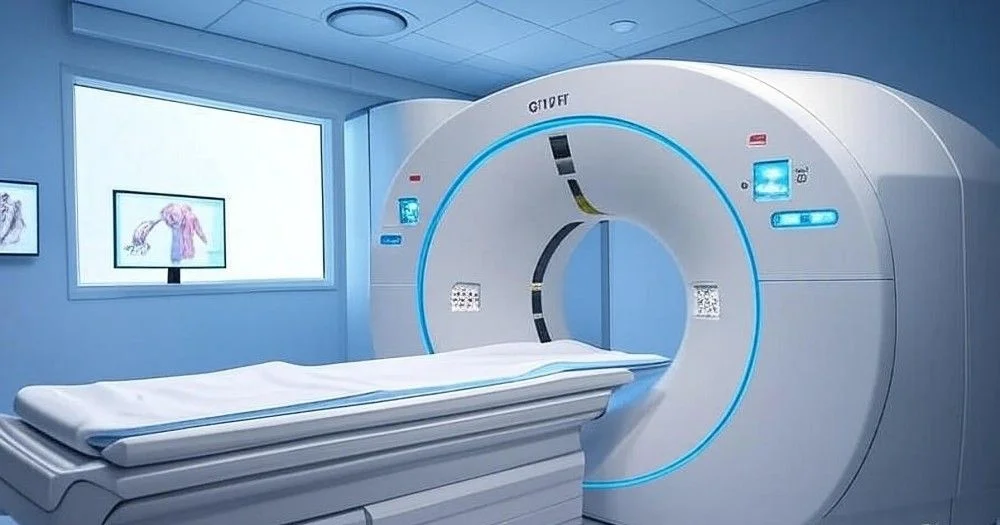
During the scan, the patient lies on a motorized table that moves through a large, ring-shaped machine called a gantry. As the table advances, the gantry rotates around the patient, continuously emitting X-rays from different angles. A computer processes this data to construct detailed “slice” images — thin cross-sections of the body — that can be stacked together to form a complete 3D reconstruction.
CT scans can be performed with or without contrast dye (iodine-based). When contrast is used, it is injected into a vein before the scan and causes blood vessels and certain organs to appear more prominently in the images, improving the detection of tumors, inflammation, and vascular abnormalities.
What Is a CT Scan Used For?
- Trauma and emergency evaluation: CT is the first-line imaging test in emergency settings because it is fast (typically 5–15 minutes) and provides immediate structural information about injuries to the head, chest, abdomen, and pelvis.
- Bone fractures and skeletal conditions: CT provides much more detail about complex fractures than plain X-rays, and is used for surgical planning in orthopedic injuries.
- Lung conditions: Pulmonary embolism, pneumonia, lung cancer screening (low-dose CT), and interstitial lung disease.
- Abdominal and pelvic conditions: Kidney stones, appendicitis, bowel obstruction, liver and pancreatic conditions.
- Cardiovascular imaging: Coronary artery calcium scoring, CT angiography of the heart and major vessels.
- Cancer detection and monitoring: Identifies tumor size and location, though it cannot assess metabolic activity.
What Is a PET CT Scan?
A PET CT scan combines two separate imaging technologies into one examination: a Positron Emission Tomography (PET) scan and a CT scan. The two scans are performed simultaneously on the same machine, and the images are fused together digitally to provide information about both the structure of tissues and their metabolic function — something no single imaging modality can do alone.
How Does the PET Component Work?
Before the scan, a small amount of radioactive tracer — most commonly fluorodeoxyglucose (FDG), a glucose molecule attached to a radioactive fluorine atom — is injected into a vein in the patient’s arm. The patient then waits 45–60 minutes while the tracer circulates through the body and is absorbed by tissues.
Cells that are metabolically active — meaning they are consuming glucose at a higher rate than normal — absorb more FDG. Cancer cells, inflamed tissue, and some neurologically active brain regions are examples of high-metabolic-activity areas. As the radioactive fluorine decays, it emits positrons, which interact with electrons to produce gamma rays. The PET scanner detects these gamma rays and maps them to create a picture of metabolic activity throughout the body.
The CT component is then performed simultaneously, providing the anatomical roadmap — showing exactly where in the body each area of high metabolic activity is located. When the PET and CT images are fused, physicians can see both what is happening inside cells and exactly where it is happening.
What Is a PET CT Scan Used For?
- Cancer diagnosis, staging, and monitoring: PET CT is the most powerful single imaging tool for cancer management — detecting primary tumors, identifying lymph node involvement, finding distant metastases, and monitoring treatment response.
- Neurological conditions: Alzheimer’s disease, epilepsy, Parkinson’s disease, and brain tumors — PET can detect abnormal patterns of brain glucose metabolism before structural changes appear on MRI or CT.
- Cardiac viability assessment: Determines whether heart muscle tissue is still alive (viable) or permanently damaged after a heart attack — critical information for deciding whether revascularization surgery will be beneficial.
- Infection and inflammation: Identifying the source of fever of unknown origin, infected prosthetic devices, or active inflammatory bowel disease.
PET CT Scan vs CT Scan: Complete Side-by-Side Comparison
| Feature | CT Scan | PET CT Scan |
| Technology | X-rays from multiple angles | Radioactive tracer (FDG) + CT combined |
| What it shows | Anatomy — size, shape, location of structures | Anatomy + metabolic function of tissues |
| Radiation exposure | 2–10 mSv (moderate) | 10–25 mSv (higher — tracer + CT combined) |
| Scan duration | 5–15 minutes | 2–3 hours total (includes 45–60 min tracer uptake wait) |
| Preparation | Often none; fast if contrast used | Fast 4–6 hours; no exercise; blood sugar control required |
| Detects early cancer? | Only if physically visible (size/structure) | Yes — detects metabolic activity before structural change |
| Cancer staging? | Partial — shows location and size | Comprehensive — whole-body staging in one scan |
| Cost (no insurance) | $300 – $3,000 | $3,000 – $10,000+ |
| Availability | Very widely available | Major medical centers; less widely available |
| Best used for | Trauma, fractures, emergency, initial diagnosis | Cancer staging, treatment monitoring, neurology, cardiology |
When Is a PET CT Scan Better Than a CT Scan?
The core advantage of PET CT over CT alone is its ability to detect disease at the cellular and metabolic level — before structural changes are large enough to be visible on CT. This makes it superior in specific clinical scenarios:
Cancer Staging
When a cancer has been diagnosed, the most critical question is how far it has spread. A CT scan can show that a lymph node is enlarged, but cannot determine whether the enlargement is due to cancer or reactive inflammation. A PET CT can distinguish between the two because cancerous nodes have significantly higher glucose metabolism than reactive ones. A single whole-body PET CT scan can stage cancer — determining whether it is localized or has spread to distant organs — A single whole-body PET CT scan can stage cancer — determining whether it is localized or has spread to distant organs — in one examination that would otherwise require multiple separate imaging studies, often supported by diagnostic lab tests..
Monitoring Treatment Response
When a cancer patient is undergoing chemotherapy or radiation therapy, their doctor needs to know whether the treatment is working. CT scans can show whether a tumor has shrunk, but tumors sometimes appear the same size on CT even when the cancer cells inside are dying. PET CT measures metabolic activity — a tumor that is responding to treatment shows dramatically reduced glucose uptake on PET, even before it shrinks significantly on CT. This allows doctors to adjust or change treatment plans earlier and more confidently.
Detecting Cancer Recurrence
After successful cancer treatment, patients require surveillance imaging to detect recurrence early. PET CT is far more sensitive than CT alone for identifying small deposits of recurring cancer, particularly in lymph nodes and soft tissues where CT findings can be ambiguous.
Neurological Evaluation
In Alzheimer’s disease, characteristic patterns of reduced brain glucose metabolism can be identified on FDG-PET years before significant structural brain shrinkage appears on CT or MRI. In epilepsy, seizure foci show abnormal metabolism between seizures (hypometabolism) and during seizures (hypermetabolism), helping neurosurgeons plan resection. These findings are invisible on CT.
Cardiac Viability
After a myocardial infarction (heart attack), some areas of heart muscle may appear non-functional on standard imaging but actually contain living, stunned muscle that could recover if blood flow is restored through bypass surgery or stenting. PET CT using specific tracers can identify these viable areas, preventing unnecessary surgery while ensuring patients who would benefit from revascularization receive it.
PET CT Scan Cost in the United States
Imaging costs vary depending on the modality, similar to MRI cost in the US.
PET CT scans are significantly more expensive than standard CT scans due to the cost of the radioactive tracer, specialized equipment, and the nuclear medicine expertise required to perform and interpret the scan.
| Scan Type | Without Insurance | With Insurance (Avg Out-of-Pocket) |
| Standard CT scan | $300 – $3,000 | $75 – $500 |
| CT with contrast | $500 – $4,000 | $100 – $700 |
| PET CT scan (whole body) | $3,000 – $10,000 | $500 – $3,000 |
| PET brain scan | $2,500 – $6,000 | $400 – $2,000 |
| PET cardiac scan | $2,000 – $5,000 | $300 – $1,500 |
Insurance coverage: Most major insurance plans, Medicare, and Medicaid cover PET CT scans when they are ordered by a physician and meet medical necessity criteria — particularly for cancer staging, treatment monitoring, and specific neurological indications. Always confirm prior authorization requirements with your insurer before scheduling.
Tip: Ask your oncologist’s office to handle the prior authorization for PET CT — they typically have dedicated staff who manage insurance approvals for imaging and can flag any issues before your appointment.
Radiation Exposure: PET CT vs CT
Both CT scans and PET CT scans involve ionizing radiation, which is a legitimate concern for patients who need multiple scans over time.
| Scan Type | Typical Radiation Dose | Equivalent Comparison |
| Chest X-ray (reference) | 0.1 mSv | Baseline reference point |
| CT head | 2 mSv | ~20 chest X-rays |
| CT chest | 7 mSv | ~70 chest X-rays / ~2 years background |
| CT abdomen/pelvis | 10 mSv | ~100 chest X-rays / ~3 years background |
| PET CT whole body | 14–25 mSv | ~140–250 chest X-rays / 4–8 years background |
To put this in perspective: the average American receives approximately 3 mSv of background radiation per year from natural sources. A single PET CT scan delivers roughly the equivalent of 5–8 years of natural background exposure. While this sounds significant, the clinical benefit of accurately staging cancer or detecting recurrence dramatically outweighs the radiation risk in the vast majority of oncology cases.
For patients who require frequent surveillance imaging, their oncologist and nuclear medicine physician will discuss the appropriate imaging interval to balance diagnostic benefit with cumulative radiation exposure.
How to Prepare for Each Scan
Preparing for a CT Scan
- Remove all metal objects — jewelry, belts, underwire bras, and body piercings.
- If contrast dye will be used: fast for 4 hours before the scan, and inform the scheduling team if you have kidney disease, diabetes, or a known allergy to iodine or contrast agents.
- Inform your doctor of all current medications — some medications, particularly metformin (used for diabetes), may need to be held around the time of contrast CT.
- Wear comfortable, loose-fitting clothing without metal components, or change into a provided gown.
- Arrive 15–30 minutes early for IV placement if contrast is ordered.
Preparing for a PET CT Scan
PET CT preparation is significantly more involved than CT preparation and must be followed carefully to avoid a non-diagnostic scan:
- Fast for 4–6 hours before the scan — no food or beverages other than plain water. Eating raises blood sugar, which causes normal tissues to compete with cancer cells for the FDG tracer, degrading image quality.
- Avoid strenuous exercise for 24 hours before the scan. Exercise increases muscle glucose metabolism, causing muscles to appear falsely “hot” on PET images and potentially obscuring findings.
- Avoid caffeine for 24 hours before the scan.
- Diabetic patients: special protocols apply. Blood glucose must be below 150–200 mg/dL at the time of tracer injection. Your nuclear medicine team will provide specific instructions about insulin timing. High blood sugar on the day of the scan may result in a rescheduled appointment.
- Dress warmly or bring a blanket — you will be asked to stay still and relaxed in a reclined chair for 45–60 minutes after the tracer injection while it distributes through your body. Cold or anxious patients have increased brown fat uptake of FDG, which can interfere with interpretation.
- Inform the team of any recent infections, recent surgery, or recent biopsy — these cause inflammation and elevated FDG uptake that can be misinterpreted as cancer.
- Nursing mothers: breastfeeding should be interrupted for approximately 12–24 hours after the scan to avoid exposing the infant to the radioactive tracer. Pump and discard milk during this period.
What Does Each Scan Feel Like?
The CT Scan Experience
A CT scan is quick and generally well tolerated. You lie on a table that slides into a ring-shaped machine. The scan itself lasts 5–15 minutes. If contrast is used, you may feel a warm flushing sensation throughout your body and a metallic taste in your mouth for 30–60 seconds after the injection — this is normal and temporary. Some patients feel mildly claustrophobic, though CT machines are much more open than MRI scanners. The machine makes whirring sounds as it rotates. You are alone in the room during the scan but in constant communication with the technologist via intercom.
The PET CT Scan Experience
The PET CT experience is longer and more involved. After arrival, a technologist inserts an IV catheter and injects the FDG radiotracer. You then wait in a quiet, dimly lit room for 45–60 minutes — you should remain as still and calm as possible during this uptake period. Bring headphones or an audiobook if that helps you relax, but avoid phone use (the electromagnetic stimulation can theoretically affect tracer distribution). After the wait, you are positioned on the scanner table and the combined PET and CT acquisition takes 20–45 minutes. You will be asked to remain very still and may be given respiratory instructions for certain portions of the scan.
PET CT vs MRI vs CT: Which Is Best for Cancer?
| Factor | CT Scan | MRI | PET CT |
| Detects tumor structure | Yes | Yes (better soft tissue detail) | Yes |
| Detects metabolic activity | No | Limited | Yes — primary advantage |
| Whole-body cancer staging | Partial | Impractical (slow) | Best option |
| Brain tumor evaluation | Limited | Best structural detail | Best functional detail |
| Bone metastases | Good | Best for marrow | Very good |
| Radiation | Moderate | None | Highest |
| Scan time | 5–15 min | 30–90 min | 2–3 hours total |
| Cost | Lowest | Moderate | Highest |
In oncology, PET CT and MRI are often used as complementary tools rather than substitutes for each other — PET CT for whole-body staging and treatment monitoring, MRI for detailed local assessment of specific tumor sites (brain, liver, pelvis, bone marrow).
Frequently Asked Questions
Is a PET CT scan always better than a CT scan?
No — PET CT is not universally superior. It is far more powerful than CT for cancer staging, treatment monitoring, and certain neurological evaluations. But for acute trauma, bone fractures, lung screening, and most emergency imaging scenarios, a standard CT scan is faster, less expensive, more widely available, and perfectly adequate. The right scan depends entirely on the clinical question your doctor is trying to answer.
Can a PET CT scan miss cancer?
No imaging test is 100% perfect. PET CT can miss very small tumors (typically below 5–8 mm), tumors with low metabolic activity (some mucinous cancers, well-differentiated thyroid cancers, and certain slow-growing tumors), and areas near the brain or bladder where normal FDG uptake is high. It can also produce false positives — areas of high FDG uptake that turn out to be inflammation or infection rather than cancer. Results are always interpreted in the context of the patient’s full clinical picture, other imaging, and pathology.
How long does a PET CT scan take?
The total time from arrival to departure for a PET CT scan is typically 2.5 to 3.5 hours. This includes approximately 20–30 minutes for check-in and IV placement, 45–60 minutes for FDG tracer uptake while you rest quietly, 20–45 minutes for the actual combined PET and CT image acquisition, and 15–20 minutes for recovery and discharge. The lengthy process is why PET CT is typically scheduled only when the clinical benefit justifies the time and cost.
When will I get my PET CT results?
A nuclear medicine physician or radiologist trained in PET interpretation typically reviews and reports PET CT results within 24–72 hours for routine scans. Your ordering physician will then discuss the findings with you — usually within a few days to a week. If your scan is being done urgently (such as for staging before an imminent surgery), preliminary results may be available the same day.
Is a PET CT scan safe for people with diabetes?
PET CT scans can be performed safely in diabetic patients, but require careful coordination with the nuclear medicine team. Blood glucose must be controlled below 150–200 mg/dL at the time of tracer injection for diagnostic image quality. Your care team will provide specific guidance about insulin and medication timing before the appointment. High blood glucose on the day of the scan often results in a rescheduled appointment, so careful preparation is important.
Does a PET CT scan hurt?
The scan itself is completely painless. You will feel a minor pinch from the IV needle insertion, and some patients report a slight cool sensation as the FDG tracer is injected. If a CT contrast agent is also used, you may experience a brief warm flushing sensation and metallic taste — this is normal and lasts less than a minute. Lying still on the table for 20–45 minutes can be uncomfortable for patients with back pain, and the waiting period after tracer injection can feel tedious, but there is no pain from the imaging process itself.
Can I drive myself home after a PET CT scan?
Yes — in most cases, you can drive yourself home after a PET CT scan. No sedation is involved, so you should feel completely alert. The radioactive tracer used is present in a very small amount and will decay and be cleared from your body within hours. However, you will be mildly radioactive for a few hours after the scan. As a precaution, most centers recommend avoiding prolonged close contact with pregnant women and young children for a few hours after the scan.
Key Takeaways
- A CT scan uses X-rays to show the structure of the body — size, shape, and location of organs, bones, and tumors. It is fast, widely available, and the standard choice for trauma, emergency evaluation, and initial tumor detection.
- A PET CT scan combines metabolic imaging (PET) with structural imaging (CT). It shows not just where a tumor is, but whether it is metabolically active — making it far superior for cancer staging, treatment monitoring, and detecting recurrence.
- PET CT is more expensive ($3,000–$10,000 without insurance) and delivers more radiation than a standard CT. It is used when the clinical benefit justifies these factors — primarily in oncology and neurology.
- Most insurance plans cover PET CT for medically indicated cancer-related imaging. Prior authorization is almost always required — confirm this before scheduling.
- Preparation for PET CT is strict: fast 4–6 hours, no exercise for 24 hours, blood glucose control for diabetics, and no caffeine.
- CT and MRI are often used alongside PET CT — each provides different and complementary information. Your oncologist and imaging team will determine the best combination for your situation.
About this article: Prepared by the LabCare Editorial Team. For medical decisions, always consult a qualified healthcare professional.
Disclaimer: This article is for educational and informational purposes only and does not constitute medical advice. PET CT and CT scan recommendations depend on individual clinical circumstances and should always be determined by a qualified physician. Always consult your doctor or specialist before making any medical imaging decisions.


