
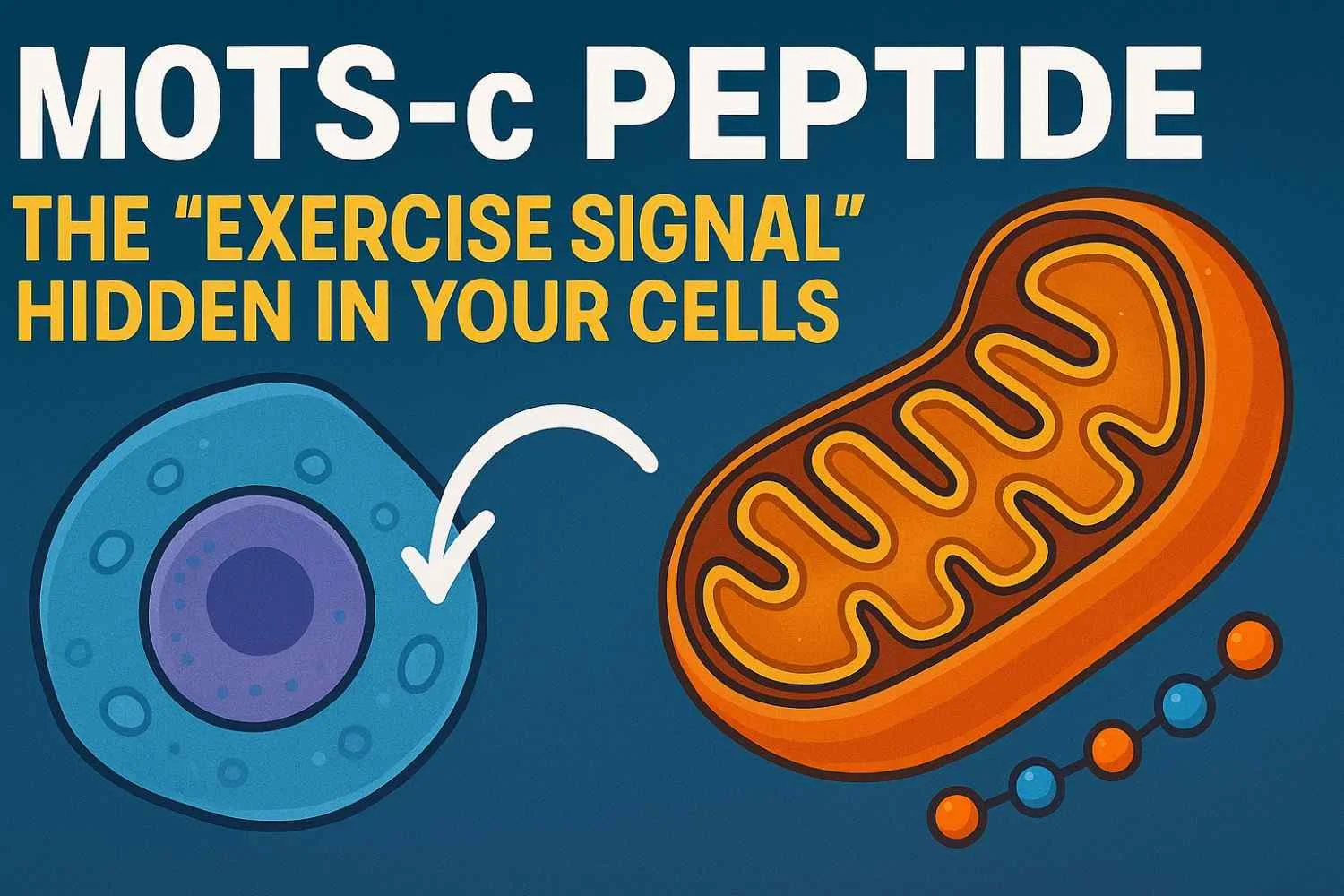
Most people know mitochondria as the powerhouse of the cell — but the more interesting story is that mitochondria are also messengers. MOTS-c is one of the signals they send, and the research around it is some of the most genuinely interesting work happening in longevity science right now
Most people know that mitochondria produce ATP — the energy currency of the cell. Fewer people know that mitochondria also produce something else entirely: molecular signals that travel out of the cell and influence metabolism, aging, and stress response throughout the body.
MOTS-c is one of those signals. Discovered in 2015 by researchers at the University of Southern California, it is a 16-amino acid peptide encoded in mitochondrial DNA — making it one of only a handful of known proteins produced by the mitochondrial genome rather than the nuclear genome. What it does in the body, what the research says about its potential applications, and where the science currently stands is what this guide covers.
What Exactly Is MOTS-c?
MOTS-c stands for Mitochondrial Open Reading Frame of the 12S rRNA type-c. It is encoded within the 12S ribosomal RNA region of the mitochondrial genome — an unusual location, since the vast majority of proteins in human cells are encoded in nuclear DNA.
The peptide consists of just 16 amino acids, making it small even by peptide standards. But size is not correlated with biological impact in molecular biology — insulin, for comparison, is only 51 amino acids and drives one of the most consequential metabolic pathways in the human body.
MOTS-c was first characterized by Dr. Changhan David Lee and colleagues at USC in a landmark 2015 paper published in Cell Metabolism. The paper demonstrated that MOTS-c could regulate metabolic homeostasis and glucose utilization in mice, and that its levels declined with age — suggesting a potential role in age-related metabolic decline.
Since that initial discovery, MOTS-c research has expanded significantly, with studies examining its role in insulin sensitivity, exercise response, inflammation, aging, and even cognitive function.
How Does MOTS-c Work in the Body?
The mechanism of MOTS-c action is multi-layered and still being fully mapped. Here is what the current research indicates:
AMPK Activation
MOTS-c activates AMP-activated protein kinase (AMPK) — often described as the body’s master metabolic sensor. AMPK is the same pathway activated by exercise, caloric restriction, and metformin (the widely used diabetes drug). When AMPK is activated, it triggers a cascade of beneficial metabolic effects: increased glucose uptake by cells, enhanced fatty acid oxidation, inhibition of fat and cholesterol synthesis, and improved mitochondrial biogenesis.
Folate Cycle Disruption
One of the more specific mechanisms identified is MOTS-c’s ability to disrupt the folate cycle in cells — the metabolic pathway that processes one-carbon units used in DNA synthesis and amino acid metabolism. This disruption triggers AICAR accumulation, which is a natural AMPK activator. This mechanism helps explain how a mitochondrial signal can have such broad effects on nuclear gene expression and whole-cell metabolism.
Nuclear Translocation Under Stress
Researchers discovered that under conditions of cellular stress — such as oxidative stress or metabolic disruption — MOTS-c can translocate from the cytoplasm into the cell nucleus, where it directly interacts with nuclear gene regulatory elements. This makes MOTS-c one of the few peptides known to act as both an extracellular hormone-like signal and a direct intracellular gene regulator. This dual mechanism significantly expands its potential biological reach.
Anti-Inflammatory Signaling
MOTS-c has been shown to modulate inflammatory signaling pathways, particularly NF-kB — one of the central regulators of inflammatory gene expression. By dampening NF-kB activity, MOTS-c may reduce chronic low-grade inflammation, which is increasingly recognized as a driver of metabolic disease, cardiovascular disease, and aging.
What the Research Shows — Potential Benefits of MOTS-c
Important context: The majority of MOTS-c research has been conducted in cell cultures and animal models. Human clinical trial data is limited but growing. All benefits described below are based on experimental evidence and should not be interpreted as established clinical outcomes.
1. Metabolic Health and Insulin Sensitivity
The most consistent finding across MOTS-c studies is its ability to improve insulin sensitivity and glucose metabolism. In the original 2015 Cell Metabolism paper, MOTS-c administration in mice on a high-fat diet significantly reduced obesity, improved insulin sensitivity, and normalized blood glucose — effects comparable to those seen with exercise or caloric restriction.
A 2021 study in Nature Aging demonstrated that MOTS-c administration in aged mice reversed age-associated insulin resistance and improved overall metabolic function. Importantly, the treated mice showed improvements in physical performance and metabolic markers that resembled those of younger animals.
These findings position MOTS-c as a potential therapeutic target for type 2 diabetes and metabolic syndrome — conditions affecting tens of millions of Americans.
2. Exercise Mimicry — The Molecular Exercise Signal
MOTS-c levels in the bloodstream increase significantly during physical exercise, particularly endurance exercise. This led researchers to investigate whether MOTS-c is part of the mechanism by which exercise produces its beneficial metabolic effects — beyond simply burning calories.
Studies have shown that exogenous MOTS-c administration can improve physical endurance, exercise capacity, and muscle performance in mice — even in sedentary animals. The AMPK activation pathway triggered by MOTS-c closely mirrors the molecular response to aerobic exercise, leading some researchers to refer to it informally as a “molecular mimic of exercise.”
An important caveat: exercise has hundreds of documented physiological benefits — cardiovascular, skeletal, neurological, psychological — that no single peptide can replicate. MOTS-c appears to copy specific metabolic signaling pathways but cannot substitute for the full systemic benefits of physical activity.
3. Aging and Longevity
The connection between MOTS-c and aging is one of the most actively researched areas. Several lines of evidence point to MOTS-c as a longevity-relevant molecule:
- Declining levels with age: MOTS-c concentrations in the blood decrease significantly with aging in both animals and humans, potentially contributing to age-related metabolic decline and increased insulin resistance.
- Centenarian association: A 2021 study found that specific genetic variants in the mitochondrial DNA region encoding MOTS-c were significantly more common in Japanese centenarians (people who lived to 100+) compared to average-lifespan controls. This suggests that MOTS-c variants affecting peptide activity may influence human longevity.
- Healthspan extension in aged mice: MOTS-c treatment in aged mice improved physical function, reduced frailty markers, and extended healthy lifespan — not just total lifespan, but the proportion of life spent in good metabolic health.
4. Cellular Stress Protection and Antioxidant Effects
MOTS-c has demonstrated cytoprotective effects in multiple stress models. It appears to reduce oxidative damage to cells by enhancing the activity of endogenous antioxidant pathways, and to modulate the mitochondrial unfolded protein response (UPRmt) — a cellular quality control mechanism that helps maintain mitochondrial function under stress.
These effects may contribute to MOTS-c’s observed benefits in metabolic disease models, since oxidative stress and mitochondrial dysfunction are closely intertwined with insulin resistance and metabolic aging.
5. Brain Health and Cognitive Function (Early Research)
A smaller but growing body of research suggests MOTS-c may have neuroprotective effects. Animal studies have shown that MOTS-c can reduce neuroinflammation, improve brain energy metabolism, and show protective effects in models of Alzheimer’s disease and Parkinson’s disease. These are early findings from animal models — human neurological applications are highly speculative at this stage but represent an interesting area for future research.
MOTS-c and the Centenarian Connection
One of the most compelling pieces of evidence for MOTS-c’s role in human longevity comes from population genetics studies. In 2021, researchers analyzed mitochondrial DNA from Japanese centenarians and compared it to age-matched and younger control populations.
They identified specific single nucleotide polymorphisms (SNPs) in the MOTS-c coding region that were significantly enriched in people who lived to 100 or beyond. One particular variant — associated with increased MOTS-c activity — was found at nearly twice the frequency in centenarians compared to controls.
This does not prove that MOTS-c directly causes longevity. But it is consistent with the hypothesis that higher or more efficient MOTS-c signaling contributes to healthier metabolic aging — one of the key factors distinguishing centenarians from the general population.
The centenarian genetic data is one of those findings that makes this field feel less like speculation and more like real science — a natural experiment showing that MOTS-c variation matters for how long people live in good health
MOTS-c vs Metformin — How They Compare
Both are often evaluated using metabolic blood tests to understand their impact on glucose and metabolic health.
Because both MOTS-c and metformin activate AMPK through related mechanisms, researchers have begun comparing them directly. This comparison is particularly relevant for the longevity research community, where metformin is one of the most discussed potential anti-aging drugs.
| Feature | MOTS-c | Metformin |
| Origin | Natural mitochondrial peptide | Synthetic biguanide drug (derived from French lilac) |
| Primary mechanism | AMPK activation via folate cycle disruption | AMPK activation via mitochondrial complex I inhibition |
| Administration | Injection (subcutaneous) in research settings | Oral tablet — FDA approved |
| FDA status | Not approved — investigational only | FDA approved for type 2 diabetes |
| Natural decline with age? | Yes — levels fall significantly with aging | N/A (synthetic drug) |
| Human trial data | Very limited — mostly animal studies | Extensive — decades of clinical use |
| Longevity evidence | Centenarian genetic associations | TAME trial ongoing for aging indication |
| Side effects | Unknown long-term profile | GI upset, rare lactic acidosis, B12 depletion |
| Current accessibility | Research-grade only, no approved product | Widely available by prescription |
The practical conclusion from this comparison: metformin has a vastly larger evidence base in humans and is accessible today as a prescribed medication. MOTS-c is a more recently discovered molecule with intriguing mechanisms and early research support, but is currently investigational. They are not interchangeable.
MOTS-c Compared to Other Research Peptides
| Peptide | Primary Research Focus | How It Differs From MOTS-c |
| BPC-157 | Tissue healing, gut repair, tendon and ligament recovery | Tissue repair focus vs. metabolic and longevity signaling |
| TB-500 (Thymosin Beta-4) | Tissue repair, muscle recovery, inflammation | Repair-oriented; not a metabolic or mitochondrial signal |
| GHK-Cu | Skin regeneration, wound healing, collagen synthesis | Primarily dermatological and tissue remodeling applications |
| Humanin | Another mitochondrial peptide — neuroprotection, insulin signaling | Sister mitochondrial peptide; overlapping but distinct mechanisms |
| Epithalon | Telomere extension, anti-aging, pineal gland regulation | Epigenetic aging focus; different mechanism from AMPK pathway |
| SS-31 (Elamipretide) | Mitochondrial membrane protection, cardiac function | Direct mitochondrial protectant vs. downstream metabolic signaling |
How to Naturally Increase MOTS-c Without Injections
Since exogenous MOTS-c is not available as an approved product, an important practical question is whether lifestyle interventions can support the body’s endogenous MOTS-c production. The research suggests several approaches:
- Aerobic exercise: Endurance exercise is the most consistently documented trigger for increased circulating MOTS-c levels. A 2019 study found significant MOTS-c elevation in the blood of human subjects following acute aerobic exercise. Regular exercise training may help maintain MOTS-c levels as part of the broader exercise-induced mitochondrial adaptation response.
- Caloric restriction and intermittent fasting: Both interventions activate AMPK — the same pathway MOTS-c activates — and are associated with improved mitochondrial function and metabolic health. Whether they directly increase MOTS-c production is not yet fully established, but the mechanistic overlap is significant.
- Cold exposure: Cold thermogenesis (cold showers, cold water immersion) activates mitochondrial stress responses that overlap with MOTS-c signaling pathways. Some researchers hypothesize that regular cold exposure may support mitochondrial peptide production, though direct MOTS-c measurement data is limited.
- Maintaining metabolic health: Since MOTS-c levels decline in metabolic disease states, maintaining healthy body weight, blood glucose, and insulin sensitivity likely helps preserve endogenous MOTS-c production as part of overall mitochondrial health.
The most evidence-supported approach to supporting MOTS-c signaling remains regular aerobic exercise — which also delivers the full range of cardiovascular, neurological, and psychological benefits that no peptide therapy can replicate.
Dosage Used in Research Studies
Because MOTS-c is not an approved drug, there is no established clinical dosing protocol. The following reflects dosages used in published animal and early human research — not recommendations for use:
- Animal studies: Most mouse studies have used doses in the range of 5–15 mg/kg body weight administered by subcutaneous injection, typically daily or several times per week. Direct translation to human dosing is not straightforward due to species differences in peptide metabolism.
- Human research: Published human studies on MOTS-c are extremely limited. The handful of pilot studies that have included human subjects have used various protocols, but no standardized human dosing regimen has been established or validated.
- Administration route: All research protocols use subcutaneous injection. Oral administration is not viable because peptides are broken down in the digestive system before reaching systemic circulation. Any product claiming to be an oral MOTS-c supplement is not delivering intact MOTS-c peptide.
There is currently no FDA-approved MOTS-c product for human use. Any MOTS-c obtained outside of a formal clinical trial is research-grade material with no regulatory oversight of purity, potency, or safety.
Current Clinical Trial Status
As of 2025, MOTS-c research is progressing, similar to trends seen in direct-to-consumer lab testing, but human clinical trials remain limited.
- Metabolic syndrome and type 2 diabetes — investigating MOTS-c’s insulin-sensitizing effects in human subjects
- Sarcopenia (age-related muscle loss) — examining whether MOTS-c can preserve or improve muscle function in older adults
- Exercise physiology — studying MOTS-c as a potential ergogenic aid and exploring its role in the molecular response to training
- Longevity and healthy aging — population studies correlating MOTS-c genetic variants with health outcomes
ClinicalTrials.gov is the authoritative source for current registered MOTS-c trials. Search for ‘MOTS-c’ or ‘mitochondrial peptide’ to find the most current registered studies.
Is MOTS-c Safe?
This is the most important question for anyone considering MOTS-c, and it deserves an honest answer rather than promotional reassurance.
MOTS-c is a naturally occurring peptide produced by the human body. In that sense, it is not a foreign substance. However, endogenous production of a molecule and exogenous administration of that molecule at potentially supraphysiological doses are fundamentally different things — with different risk profiles.
- Short-term animal studies have not identified significant toxicity at the doses used.
- The limited human research conducted to date has not reported serious adverse events.
- Long-term safety data in humans does not exist — the peptide was only discovered in 2015.
- The immunogenic potential of repeated exogenous peptide administration is not well characterized.
- Quality and purity of research-grade MOTS-c from unregulated suppliers is not guaranteed.
The honest bottom line: MOTS-c appears to be well-tolerated in short-term research contexts, but the absence of long-term human safety data means the risk profile over months or years of use is genuinely unknown. Anyone considering experimental use should do so only under medical supervision within a clinical research context.
Frequently Asked Questions
Can I buy MOTS-c as a supplement?
Not as a regulated, approved supplement or medication. MOTS-c is available through research chemical suppliers as a research-grade peptide, but these products are not FDA-approved, not manufactured to pharmaceutical quality standards, and are intended for research use only. Their use in humans outside of a clinical trial context is not medically recommended and carries unknown risks.
Does MOTS-c really replace exercise?
No — and this needs to be stated clearly. MOTS-c mimics some specific cellular metabolic pathways that are also activated by exercise, particularly AMPK activation and glucose metabolism. But exercise produces hundreds of systemic adaptations — cardiovascular fitness, bone density, neuroplasticity, psychological wellbeing, immune function, sleep quality — that a single peptide signal cannot replicate. MOTS-c is an interesting piece of the exercise signaling puzzle, not a substitute for physical activity.
How does MOTS-c relate to humanin?
Humanin is another mitochondrial-derived peptide — also encoded in the 16S ribosomal RNA region of mitochondrial DNA — discovered slightly before MOTS-c. Both are part of a growing family of mitochondrial-derived peptides (MDPs) that researchers are actively studying. Humanin has shown neuroprotective, insulin-sensitizing, and cardioprotective effects in research models. MOTS-c and humanin appear to have overlapping but distinct mechanisms and biological roles. The discovery of both has opened a new field of mitochondrial peptide biology.
Why do MOTS-c levels decline with age?
The exact mechanism is not fully established, but the leading hypothesis is that age-related mitochondrial dysfunction — including reduced mitochondrial DNA copy number, accumulated mitochondrial DNA mutations, and declining mitochondrial biogenesis — reduces the output of mitochondrial-derived peptides including MOTS-c. This decline may itself contribute to the metabolic deterioration associated with aging, creating a potential vicious cycle where aging reduces MOTS-c, and reduced MOTS-c accelerates metabolic aging.
Is MOTS-c the same as the C-peptide measured in diabetes tests?
No — these are completely different molecules that happen to share the word ‘peptide.’ The C-peptide measured in diabetes blood tests is a fragment of proinsulin produced by the pancreas alongside insulin. used to assess residual insulin production. MOTS-c is a mitochondrial-derived peptide with entirely different structure, origin, and function. The similarity in name is coincidental.
Key Takeaways
Do not confuse MOTS-c with the C-peptide measured in diabetes tests — they are entirely different molecules.
MOTS-c is a 16-amino acid peptide encoded in mitochondrial DNA — discovered in 2015 and one of only a handful of proteins produced by the mitochondrial genome.
Its primary mechanism is AMPK activation via folate cycle disruption — the same metabolic pathway triggered by exercise, caloric restriction, and metformin.
Research in animals and early human studies suggests potential benefits for insulin sensitivity, metabolic health, physical performance, and healthy aging.
MOTS-c levels naturally decline with age and are more common in certain genetic variants found in centenarians — suggesting a role in human longevity.
It is NOT FDA-approved, not available as a regulated supplement, and has no established human dosing protocol. It remains investigational.
Exercise — particularly aerobic endurance exercise — is the most evidence-supported way to naturally support MOTS-c signaling.
MOTS-c is still early-stage science — but it is the kind of early-stage science that is worth following closely. The combination of a plausible mechanism, animal evidence, and human genetic associations makes it one of the more credible candidates in the longevity peptide space. We will update this guide as the clinical trial data matures.
About this article:
Prepared by the LabCare Editorial Team, drawing on 14+ years of experience in the diagnostic laboratory industry. All health and science content is reviewed for factual accuracy before publication. This article is for educational purposes only.
Disclaimer: This article is for educational and informational purposes only. MOTS-c is an experimental peptide that is not FDA-approved for any medical use. Do not attempt to purchase, administer, or use MOTS-c outside of a formal clinical research context. Always consult a qualified healthcare professional before considering any investigational therapy.


